


Maximize your email campaign’s potential with targeted personalization, assured deliverability, and strategic analytics. This guide demystifies emailing marketing, providing actionable steps to engage your audience effectively and drive substantial results.
Key Takeaways
- Personalized and relevant email marketing content that is compliant with regulations like CAN-SPAM and GDPR has become essential to meet customer expectations and achieve successful campaign outcomes.
- Email campaign effectiveness hinges on crafting engaging subject lines and content, optimizing for mobile, and ensuring deliverability to avoid spam filters, thus enhancing open rates and subscriber engagement.
- Advanced techniques such as list segmentation, email personalization, automation, A/B testing, and predictive analytics are crucial for tailoring content to user behavior and preferences, improving engagement, and driving successful marketing outcomes.
Demystifying Email Marketing
Email marketing has come a long way since its inception. Early email marketing was all about mass mailings – the more people you could reach, the better. But as times have changed, so has email marketing. Today’s email marketing is no longer about sending the same message to everyone on your list. It’s about delivering personalized, relevant information to people who have given you their express permission to do so. This strategic change reflects the evolving customer expectations for more customized content.
The effectiveness of email marketing is undeniable, and a well-executed successful email marketing campaign can significantly contribute to its success. Its compelling nature prompts users to interact, solidifying its effectiveness and making it a fundamental component of digital marketing strategies that nurture leads, inform customers, and drive sales. But this does not mean it is without its challenges. Despite its high ROI, email marketers face challenges like ensuring emails escape spam filters, overcoming inbox competition, and achieving proper design across various devices, all while forging positive affiliate relationships and maintaining brand awareness.
The Anatomy of a Stellar Email Campaign
When you think of email marketing campaigns, various types might come to mind. From welcome and newsletter emails to lead nurturing and seasonal marketing emails, each serves its unique objective such as increasing brand awareness or maintaining consistent touchpoints with subscribers. But no matter the type of campaign, email marketing campaigns tend to have one thing in common – the ability to craft subject lines that capture attention. After all, the subject line plays a key role in determining whether an email is opened.
The advent of AI technology has further refined the precision in crafting effective subject lines. Utilizing AI to identify patterns that resonate with subscribers can potentially increase open rates by up to 10%.
Crafting Irresistible Subject Lines

What elements contribute to an irresistible subject line? Here are a few key factors to consider:
- Personalization: Adding a personal touch by including elements like the recipient’s first name or company can significantly boost open rates.
- Clarity: Being clear and specific about the content of the email can help recipients understand what to expect and increase open rates.
- Specific offers: Mentioning specific offers or incentives in the subject line can pique recipients’ interest and lead to higher open rates.
By incorporating these elements into your email subject line, you can create more compelling and effective emails.
Conciseness is also key. Subject lines within 30 to 50 characters are more likely to be opened. But a captivating subject line alone isn’t enough. The effectiveness of the subject line is enhanced by a well-crafted preview text. A perfect example is Spotify, which has been successful in personalizing email subject lines, resulting in higher open rates.
Designing Engaging Email Content
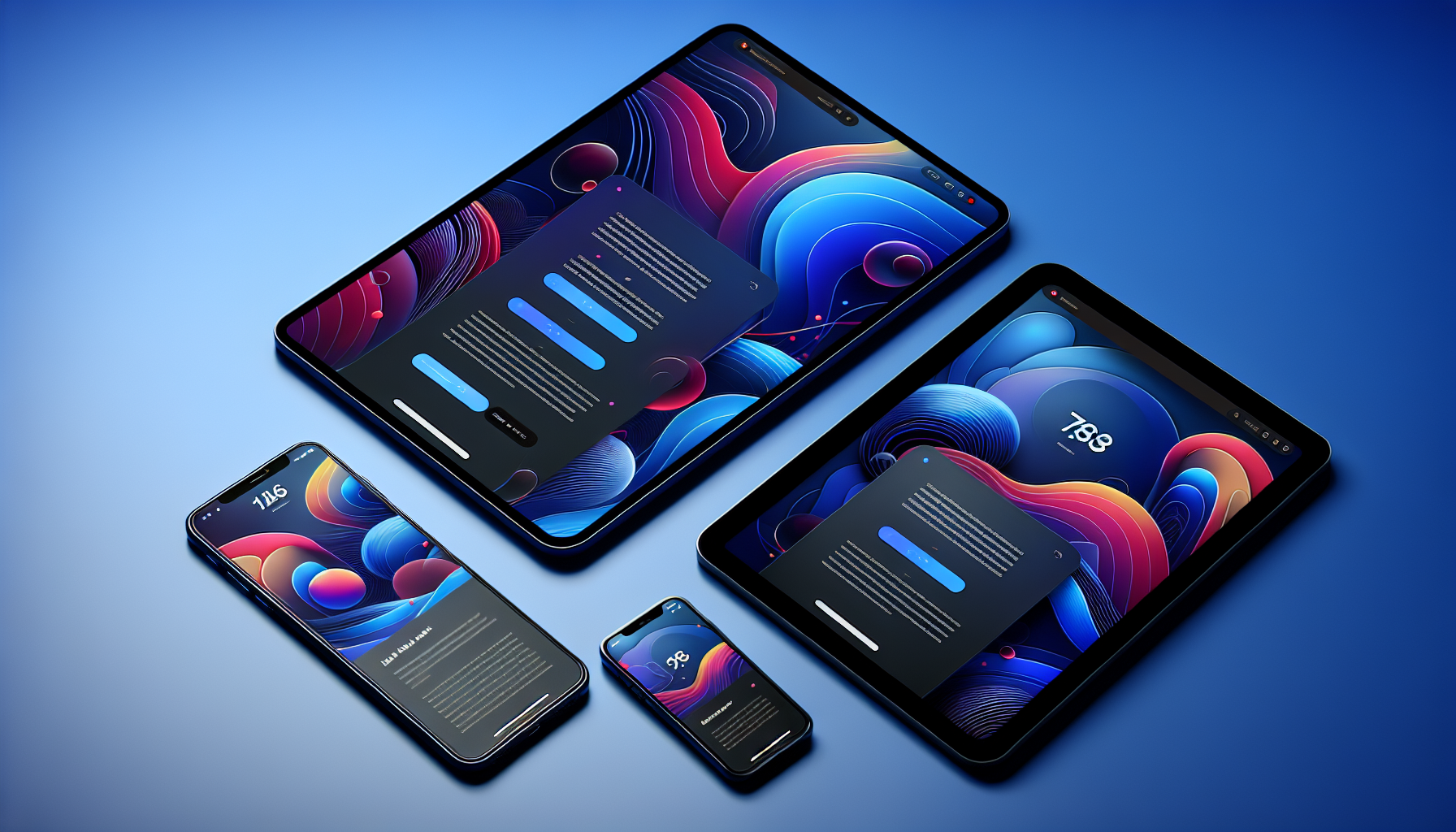
What transpires once your recipient opens the email? The battle isn’t over just yet. Now, it’s time to engage them with your content. And one key factor that affects engagement is mobile optimization. With a significant number of users accessing emails through their smartphones and tablets, ensuring your emails display properly on these devices is paramount. This includes:
- Adopting a responsive design
- Ensuring emails are no wider than 500 to 650 pixels
- Avoiding common mobile optimization mistakes like small fonts and crowded content.
Email design isn’t just about readability and responsiveness; it’s also about brand recognition. By integrating your email design with your overall brand identity, including using a consistent color palette and typography and including your company logo, you’re building brand recognition and trust among your subscribers. Furthermore, a well-designed email layout with a clear hierarchy, balanced use of images and text, and sufficient white space guides readers through the content, enhances the reading experience, and can place the main message and call-to-action above the fold for better visibility.
Lastly, don’t forget to engage your readers. Including engagement features such as feedback prompts in your email newsletters can boost user interaction, making recipients feel heard and valued.
Ensuring Deliverability to the Recipient’s Inbox
Having discussed crafting subject lines and designing content, it’s time to address another critical element of email marketing: deliverability. Deliverability refers to the ability to deliver emails to the intended recipient’s inbox, avoiding the spam folder or being blocked altogether.
Ensuring deliverability isn’t always a walk in the park. The content of your email, for instance, needs to be carefully curated. Avoid spam-like words, excessive punctuation, or misleading information, and steer clear of topics commonly associated with spam, like weight loss or body enhancements.
Your sender reputation is influenced by numerous factors, including:
- Your IP address reputation
- Your domain reputation
- Your engagement rates
- Customer feedback
All of these factors play a significant role in deliverability.
To optimize deliverability, it’s essential to:
- Maintain email list quality by regularly removing invalid addresses
- Choose an experienced and technically competent email service provider among various internet service providers and email service providers
- Ensure proper email design along with correct sender authentication, including the use of a valid sender’s email address.
Building and Segmenting Your Email List
With a captivating subject line, engaging content, and deliverability strategy in place, what’s the next step? Building and segmenting your email list. Building an email list based on permission-based practices is essential, which includes obtaining express opt-in consent and complying with regulations like the CAN-SPAM Act and GDPR. But be wary of shortcuts. Buying email lists, for example, can harm your sender reputation and violate regulations, leading to low engagement and potential legal consequences.
Once you’ve built your list, don’t treat it as a monolith. Segmenting your email list into sub-lists based on common traits like preferences or behavior ensures your messages are relevant and increases the likelihood of successful subscriber engagement.
Organic Growth Tactics for Email Lists
The process of building an email list need not be intimidating. In fact, there are several organic growth tactics you can employ. One way is to offer free opt-in incentives such as eBooks, PDF reports, or discounts to entice people to subscribe. Where you place your opt-in form also matters. It should be visible and easily accessible, which can be achieved by including them in your website’s sidebar, header, or as a popup.
Your existing subscribers can also help grow your list. Here are some strategies to encourage them to share your newsletter within their networks:
- Use your social media platforms to feature opt-in forms and showcase positive testimonials.
- Incorporate interactive elements like quizzes where in-depth results are offered with email subscription.
- Add subscription options in forwarded emails to attract new potential subscribers.
The Art of Email List Segmentation
Once you’ve built your email list, how can you leverage it effectively? The answer lies in segmentation. By dividing your email list based on basic demographic information like age, gender, location, or even behavioral changes, you can ensure that your subscribers receive content that’s relevant to them. This can be achieved by utilizing various segmentation criteria, such as:
- Geographic location for localized content
- Engagement levels for targeting active subscribers
- Purchase frequency to identify loyal customers
- The customer’s position in the sales funnel to deliver stage-appropriate messages
But segmentation goes beyond demographics or behavior. With the help of predictive analytics and data, you can determine the optimal timing and frequency for your emails and personalize your messaging in a way that resonates with different customer segments. And with email automation tools, you can send targeted automated emails based on user behavior patterns, attributes, and engagement levels, thus enhancing overall engagement metrics.
Leveraging Email Personalization for Higher Engagement

Let’s delve into the topic of personalization. We’ve touched on it briefly when we discussed subject lines, but it’s so much more than that. By incorporating personalization into marketing emails, businesses can witness an increase in open rates by 22.28% and click-through rates by 3.32%. This serves as a powerful tool for boosting engagement and conversion. By sending automated emails, offering incentives, and reminders, you can foster positive relationships with your subscribers, which can lead to increased customer loyalty.
Triggered emails can improve the customer experience by matching shopper behavior with product information, such as with abandonment emails, product recommendations, and post-purchase emails. Customizing email content based on demographic segments and past purchases can provide tailored offers that align with customer interests and increase conversion rates. And with the use of psychographic segmentation, you can divide your audience based on traits and interests, allowing for even more personalized email content.
Personalization Beyond the Name
When it comes to personalization, it’s not just about using the subscriber’s name. Advanced personalization techniques include:
- Detailed customer personas
- Dynamic content
- Behavior-triggered emails
- Content customization
These techniques leverage user data, including browsing history and purchase patterns, to create tailored communications.
Adding a personal touch by sending emails from actual company representatives or inviting customers to share their details creates more meaningful connections. Furthermore, incorporating user-generated content into email marketing campaigns can boost authenticity and foster a sense of community among subscribers.
Email Marketing Automation: Work Smarter, Not Harder
The essence of email marketing automation is to work smarter, not harder. With automation, much of the personalized campaign work is handled for you, saving time and effort, ensuring the right communications are sent at the right time, and minimizing human errors. Automated workflows based on triggers such as subscriber actions and behaviors enable the creation of complex email sequences and time-efficient marketing operations.
By integrating with CRM and e-commerce systems, you can enhance efficiency, and predictive analytics can help you drive better campaign performance through data insights. Automation increases efficiency by sending automated emails, offering incentives, and reminders, which foster positive relationships with subscribers.
Setting Up Trigger-Based Email Sequences
How does one go about setting up trigger-based email sequences? First, it’s important to understand what they are. Behavior-triggered email marketing campaigns are automated emails sent to customers based on their specific actions, like visiting a site, opening an email, or making a purchase. Setting up a trigger email campaign typically involves choosing the type of campaign, selecting the target audience, outlining the workflow steps, composing the email content, and reviewing before activation.
Email sequences can include:
- Welcome emails after newsletter sign-up
- Onboarding emails post-purchase
- Shopping cart abandonment emails
- Prompts to return for inactive customers
- Transaction confirmation
- Post-purchase feedback requests
Automated electronic mail can also be sent based on time- or date-specific criteria, such as newsletters or payment reminders, without being triggered by direct user actions.
Analyzing and Improving with Email Analytics
The importance of analyzing and improving your campaigns is on par with their setup. Keeping an eye on campaign metrics such as open rates, click-through rates, and tracking the performance of trigger-based email sequences is pivotal for understanding audience engagement and guiding future campaigns. Using analytics to analyze the timing and frequency of triggered emails can enhance the cadence of sending emails, thus optimizing your email marketing strategy and improving customer retention.
Predictive analytics is another essential tool in your arsenal. By using data, statistical algorithms, and machine learning, predictive analytics enables marketers to forecast future behaviors of subscribers and create more effective and targeted email campaigns. Insights gathered from analytics on customer satisfaction through surveys, product reviews, and social media interactions can significantly contribute to building brand equity and informing the direction of future email campaigns.
Integrating Email with Other Marketing Channels
Email marketing isn’t an isolated strategy. It can and should be integrated with other marketing channels for a more holistic approach. Email marketing can complement other marketing strategies by being leveraged for specific promotions, special events, and announcements, and is versatile enough to integrate with various other marketing channels. Engagement across different marketing channels can be enhanced through strategic use of email marketing, such as collaborating with influencers to co-promote email lists and including social media channel highlights in email campaigns.
By sharing valuable resources, news, and updates, email marketing raises brand awareness and generates web traffic, ensuring that subscribers are regularly informed about the brand and directed towards the business website. Integrated email campaigns can drive sales by showcasing products and services, offering promotions like discounts and free shipping, and employing upselling and cross-selling techniques, all designed to trigger purchases as part of a successful marketing campaign.
Cross-Promotion with Social Media
Take social media, for example. Sharing email content on social media platforms can expand the reach and effectiveness of a marketing strategy across both channels. Incorporating social sharing buttons into email content enables subscribers to easily share valuable information with their networks, further increasing its reach.
Running social media contests or events that are exclusively advertised via email can incentivize subscribers to engage with the brand’s social media accounts. Teasing future content that will be posted on social media in email communications can build anticipation and drive traffic from email subscribers to social platforms. And to demonstrate credibility and encourage more sign-ups, nothing beats social proof, such as showcasing subscriber counts or featuring testimonials in emails.
Enhancing Content Marketing Efforts
Email marketing also plays a significant role in content marketing. As a marketing manager, using email marketing as a distribution channel effectively promotes various forms of content, including blog posts and videos, to a segmented and interested audience. The content you choose to promote should resonate with your audience, ensuring that it is both relevant and engaging.
Incorporating compelling calls to action and visually attractive links within email newsletters can significantly boost the click-through rates to the promoted content. Moreover, content originally created for email marketing can be repurposed into new formats like blog posts, podcasts, or webinars, enriching the overall content marketing efforts.
The Do’s and Don’ts of Email Marketing
Like any other strategy, email marketing comes with its set of do’s and don’ts. Here are some tips to keep in mind:
- Avoid using no-reply email addresses to maintain trustworthiness with the recipients.
- Incorporate the brand name into the sender’s name to reinforce trustworthiness and brand recognition among your audience.
- Include a sign-up button in your emails to capture new subscribers from forwarded emails and organically grow your audience.
Adhering to Email Marketing Regulations
Compliance with email marketing regulations is mandatory. Anti-spam laws like the CAN-SPAM Act in the US, the Spam Act in Australia, and the Privacy and Electronic Communications Regulations (PECR) in the UK make it illegal to send misleading commercial emails and mandate providing an unsubscribe mechanism. To comply with data protection laws and maintain brand integrity, it is crucial to use permission-based marketing. This ensures that marketing communication is only sent to individuals who have given their consent. Implementing a double opt-in process ensures a high-quality and engaged email list while adhering to anti-spam regulations.
To prevent your emails from being flagged as spam by email clients, follow these guidelines:
- Avoid using misleading or deceptive sender names and subject lines
- Refrain from phrases like ‘no reply’ in sender’s email addresses
- Steer clear of flagged spam words such as ‘free’ and ‘act now’ in subject lines
- Every email is required to include a clear and straightforward unsubscribe option
Non-compliance with email marketing regulations can lead to severe consequences, including fines, lawsuits, or criminal charges.
Avoiding Common Email Marketing Mistakes
It’s just as crucial to steer clear of common email marketing errors. One such mistake is not optimizing the timing and frequency of your emails. Maintaining a balance between engagement and overexposure helps maintain product awareness without overwhelming subscribers. Continuous engagement through well-timed emails is essential to avoid high unopened rates and prevent subscribers from unsubscribing.
Brand consistency is another aspect that marketers often overlook. Maintaining branding consistency in email marketing is crucial as it ensures recipients feel they are interacting with the familiar brand they trust.
Advanced Email Marketing Techniques
Delving deeper into the world of email marketing unveils advanced techniques capable of significantly boosting your campaigns. Techniques like A/B testing and predictive analytics can help you refine your emails and make them more effective. Conducting a five-second test as a part of A/B testing ensures the clarity and understandability of the call-to-action.
Clear and understandable calls-to-action can increase the effectiveness of email campaigns by preventing confusion among recipients.
Maximizing Impact with A/B Testing
A/B testing serves as a potent instrument for amplifying the impact of your email marketing campaigns. Regular A/B testing of different email design elements can lead to improved engagement and better campaign results. By helping to improve campaigns and learn more about the audience, A/B testing contributes significantly to the enhancement of email marketing strategies.
A/B testing should involve a hypothesis based on email campaign statistics and user behavior to identify areas for optimization. Focusing A/B testing on one element at a time, such as subject lines or calls-to-action, aids in accurately determining its effect on engagement. Advanced A/B testing can include customizing multiple elements like picture placements, overall messaging, and personalization to see which email templates yield higher engagement.
Regularly perform A/B testing on your email offers to determine what appeals most to your target market and optimize your opt-in strategies. A/B tests should have a specific goal in mind, such as increasing open rates or click-through rates, and the performance of variations is measured based on these key metrics. Utilizing A/B testing to compare different content promotion strategies within emails helps to identify which approaches yield the best engagement and conversions.
Testing and experimenting with different email marketing strategies through A/B tests helps to understand what resonates best with the audience and can be used to enhance other marketing efforts.
Harnessing Predictive Analytics
Another advanced technique that can substantially enhance your email marketing is predictive analytics. By analyzing historical data, predictive analytics can provide insights, reveal trends, and spot issues that could impede revenue, aiming to forecast potential future outcomes using email marketing software.
The implementation of predictive analytics in email marketing campaigns can enhance performance, leading to a healthier bottom line through:
- Increased conversions
- Customer loyalty
- Retention
- Sales
Consistently sending targeted and relevant email content using predictive analytics can increase customer loyalty, which may lead to more purchases and referrals. By integrating predictive analytics into your email marketing, you’re taking a data-driven approach that allows you to stay ahead of the curve and capitalize on evolving trends.
Summary
In conclusion, email marketing is a powerful tool that can help businesses connect with potential customers, nurture relationships, and drive sales. From crafting compelling subject lines and engaging content to ensuring deliverability, building and segmenting your email list, leveraging personalization, integrating with other marketing channels, and utilizing advanced techniques like A/B testing and predictive analytics, there are many facets to a successful email marketing campaign. By adhering to best practices and avoiding common mistakes, businesses can effectively utilize email marketing to boost their brand awareness, increase customer loyalty, and ultimately, improve their bottom line. The journey to mastering email marketing may be intricate, but with the right strategies, the results can be rewarding.
Frequently Asked Questions
What is email marketing method?
Email marketing is a cost-effective method of promoting your business, communicating with customers, and achieving your marketing goals. It yields an average return of $42 for every $1 spent.
What are the 4 types of email marketing?
The four primary types of email marketing are transactional emails, promotional emails, retention emails, and newsletter emails. These types can help you effectively engage with your audience and achieve your marketing goals.
How can I make email marketing?
To create successful email marketing, choose a relevant email list, personalize the content, and be conversational. Also, ensure to follow email or spam regulations.
What are the 5 steps of email marketing?
The 5 steps of email marketing are: Define your “what” and tactical “why”, streamline targets through market segmentation, deliver client- and solution-oriented messaging, and create geo-specific and industry-targeted email marketing campaigns. This ensures a successful email marketing campaign by cultivating awareness, consideration, conversion, loyalty, and advocacy.
How do you write a marketing email?
When writing a marketing email, focus on a brief, relevant, and personalized subject line, timely and valuable content, and consider the frequency of your emails for the best impact. These elements are crucial to effectively engage your audience.
If you need Email Marketing Service, get in touch with TECHenya Solutions and see our comprehensive digital marketing services.